
- Home
- Services
- Residential
- Residential Junk Removal
- Same Day Junk Removal
- Furniture Removal
- Couch Removal
- Mattress Removal
- Appliance Removal
- Refrigerator Disposal
- Hot Tub Removal
- Yard Waste Removal
- Scrap Metal Removal
- E-Waste Disposal
- Garage Cleanout Services
- Home Cleanouts
- Estate Cleanout
- Storage Unit Cleanout Services
- Attic Cleanout Services
- Hoarding Cleanup
- Shed Removal
- Construction Debris Removal
- Piano Removal
- Carpet Removal
- Tire Disposal
- Commercial
- Residential
- Service Areas
- About
- Blog
- Contact
EVICTION CLEANOUT TRUCKEE, CA
Eviction Cleanout in Truckee & North Lake Tahoe
Eviction cleanout work needs a defined authorization and removal list so abandoned ordinary contents can be cleared without confusing them with items that must remain. Call today for a fast, free estimate.
- Licensed & Insured
- Locally Owned
- Serving Since 2016
Get Your Free Quote
By submitting this form, you agree to our Terms of Use including consent to receive calls regarding your free estimate.
Confidential · We respond within one business day
Home › Eviction Cleanout
When post-eviction turnover once the property owner or manager is legally authorized to remove remaining items, eviction cleanout can remove abandoned furniture, bags, boxes and other non-hazardous tenant contents without turning the project into a do-it-yourself carrying and loading job. At Truckee Junk Co., we start by confirming what should leave, where it is located, and how the crew can reach it. That gives the estimate a real scope and lets us plan around stairs, gates, parking, interior routes, or outdoor access before the appointment. The goal is straightforward: remove the approved material, keep the rest of the property organized, and leave the immediate work area ready for the customer’s next step.
Eviction Cleanout can be straightforward when the scope is narrow, or labor-intensive when the same material is spread across several spaces. We base the plan on the customer’s real situation, including post-eviction turnover, rental repair preparation, property management, cleaning access, re-leasing, and clearing belongings left in approved areas. The crew needs to know what is leaving, what stays, where the loading point is, and whether any part of the route changes the amount of handling required. That keeps the estimate tied to the job instead of a generic service description and makes it easier to coordinate the removal with cleaning, moving, maintenance, or other work.
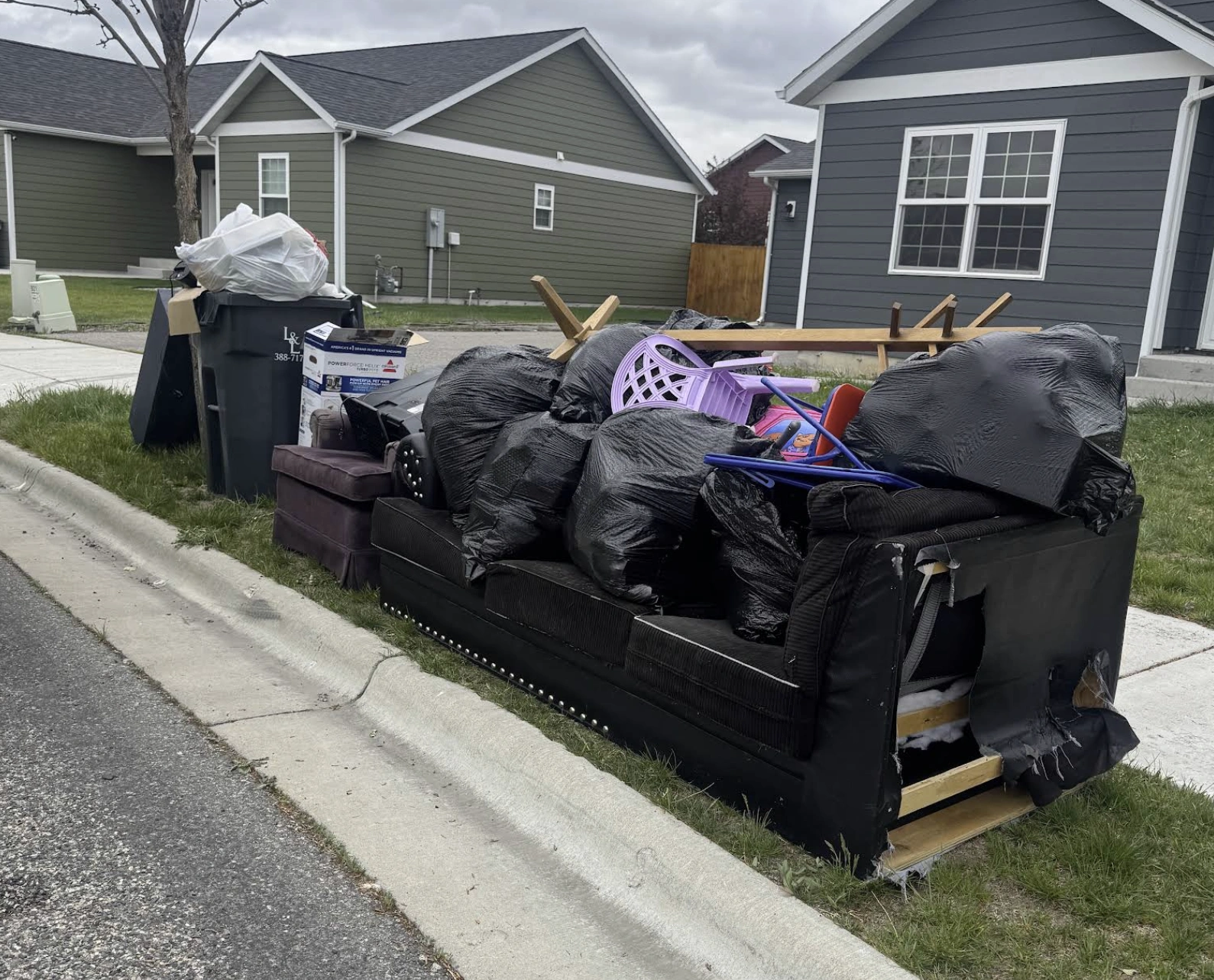
Common Reasons Customers Need Eviction Cleanout
Eviction Cleanout often starts when a space has reached the point where sorting and carrying it out alone is slowing down the next property step. Typical material can include abandoned furniture, bags, boxes and other non-hazardous tenant contents, while the timing is often connected to post-eviction turnover once the property owner or manager is legally authorized to remove remaining items. The project can be partial or extensive, but the removal boundary should be clear before loading begins.
- Authorized abandoned items
- Tenant furniture
- Bagged belongings
- Move-out debris
When belongings are spread through several rooms, closets, or storage areas, a broader home cleanout approach may be more practical than treating each room separately.
Common eviction cleanout requests often have a practical deadline or space problem behind them. Examples include post-eviction turnover, rental repair preparation, property management, cleaning access, re-leasing, and clearing belongings left in approved areas. In each case, the customer benefits from deciding the desired end condition before loading begins. A single approved pile is different from a whole-room clearout, and a pickup that includes several categories of material needs more planning than one bulky item. Photos are useful because they show both the material and the surrounding space, which helps us distinguish a simple carry from a job affected by stairs, long distances, or limited staging.
Decide What Stays Before Loading Starts
The fastest way to make a cleanout confusing is to leave keep-versus-remove decisions until the crew is already carrying items. Mark retained furniture, boxes, documents, owner-supplied fixtures, or other belongings that stay. For estates, rentals, offices, or shared properties, make sure the person authorizing removal is clear about the scope. If another area needs garage cleanout services, identify it in advance instead of adding it at the end.
Preparation for eviction cleanout is mostly about decisions and access, not carrying items to the curb. Before the appointment, confirm the legal and management process is complete, identify any property that must be retained, provide access, and separate documents or questionable items. The customer should also identify any room, cabinet, storage area, or object that is outside the removal scope. That is especially important when several people are involved in a move, estate, rental, or business transition. Clear instructions reduce the chance of repeated questions and let the crew keep moving. If the property is occupied, pets, vehicles, and everyday traffic can also be planned around so the work area stays practical.
How We Organize the Cleanout
On a eviction cleanout job, we work through the approved areas in a sequence that fits the property instead of requiring one oversized staging pile. The crew may need to coordinate working only from authorized areas, keeping common spaces clear, moving bulky pieces first when useful, and checking uncertain items before loading, while keeping retained belongings and normal access separated from the removal path. Bulky pieces can establish the loading order, with boxes and smaller accepted items following as space allows. This approach is especially useful when post-eviction turnover, rental repair preparation, property management, cleaning access, re-leasing, and clearing belongings left in approved areas because the customer can see progress area by area without turning the rest of the property into temporary storage.
During eviction cleanout, the crew works from the agreed spaces toward the loading point. The practical approach is working only from authorized areas, keeping common spaces clear, moving bulky pieces first when useful, and checking uncertain items before loading. We keep the route in mind because repeated carrying is often where most of the labor occurs. A job with good parking and a ground-level exit can move very differently from one with several flights of stairs or a distant loading zone. Organizing the movement also helps protect areas that remain in use and gives the customer a clear sense of progress instead of turning the property into a temporary staging yard.
Access and Property Logistics
Access for eviction cleanout is evaluated around the specific path from the approved items to the truck. Relevant conditions can include apartment stairs, elevators, shared corridors, parking restrictions, gates, multi-unit scheduling, and timing around cleaners or maintenance crews. Those details affect labor and the order in which items should move, particularly when the job includes heavy, awkward, or numerous pieces. We use the estimate to identify the workable carrying route in advance so the crew is not improvising around blocked doors, shared spaces, or parking once loading starts. The goal is to keep the removal orderly while other parts of the property remain as usable as practical.
Property logistics matter during eviction cleanout, especially when the material is not already at driveway level. Relevant conditions include apartment stairs, elevators, shared corridors, parking restrictions, gates, multi-unit scheduling, and timing around cleaners or maintenance crews. We plan around the route the crew will actually use, not an idealized path that does not exist. If snow, parked vehicles, building rules, or another contractor changes access before the appointment, the customer should let us know. Small changes in staging can make a large difference in carrying distance and can affect whether the original schedule still fits the job.
What Belongs in the Removal Scope
Our cleanout scope is ordinary non-hazardous contents. Hazardous waste, biohazard remediation, and materials requiring specialized regulated handling are excluded from a normal cleanup. When the project also includes tire disposal, we can define that approved non-hazardous portion separately. See the applicable public waste resource for current public disposal information.
The removal scope also needs clear boundaries. For eviction cleanout, Truckee Junk Co. handles the physical removal of authorized non-hazardous contents; legal possession decisions, biohazard cleanup, and regulated waste are separate matters. If the crew finds a questionable item, the safer approach is to stop and identify it rather than mix it into the load. Customers can help by pointing out paint, chemicals, fuel, medical waste, unknown containers, or other material that may need a specialized destination. A defined boundary protects the customer from assuming every material can be handled the same way and keeps the job focused on the ordinary items Truckee Junk Co. is prepared to remove.

Why Customers Choose Truckee Junk Co.
Truckee Junk Co. approaches eviction cleanout around the customer’s end goal rather than treating the job as an undefined cleanup. We confirm the approved areas, account for volume, room count, labor, floor level, stairs or elevator access, parking, timing, and disposal requirements, and organize the work so the crew can handle working only from authorized areas, keeping common spaces clear, moving bulky pieces first when useful, and checking uncertain items before loading. When the load is complete, the intended result is to clear the agreed unit or property areas so maintenance, cleaning, repairs, or re-leasing can move forward. That defined scope gives the customer a practical estimate before the appointment and a clear understanding of what the removal is meant to accomplish.
The value of hiring Truckee Junk Co. for eviction cleanout is that the customer does not have to solve the loading plan alone. We organize the work around the property, handle the approved carrying, and aim to clear the agreed unit or property areas so maintenance, cleaning, repairs, or re-leasing can move forward. A useful estimate considers volume, room count, labor, floor level, stairs or elevator access, parking, timing, and disposal requirements. That gives the customer a defined scope to approve and a way to identify optional items before the job starts. Whether the request is one difficult pickup or part of a larger property transition, the service is built around the same goal: remove what was approved without creating unnecessary work around it.
For eviction cleanout, a useful estimate starts with the difference between what is visible and what the crew will actually have to move. Tell us whether the approved items are loose, boxed, stacked, assembled, disconnected, or spread between several areas. For this type of job, volume, room count, labor, floor level, stairs or elevator access, parking, timing, and disposal requirements can change the labor and loading plan. We also want to know whether another crew, delivery, sale, inspection, or turnover depends on the space being cleared. Those details help us set a practical scope before arrival and keep the removal focused on the result you need rather than treating the property like a generic pile of junk.
Why choose Truckee Junk Co. for eviction cleanout? Clear scope, careful access planning, professional loading, and a work area left tidy after the approved removal.
Service Areas: Truckee & North Lake Tahoe
Let's get started.
Frequently Asked Questions About Eviction Cleanout
How should I prepare for eviction cleanout?
Separate or clearly mark anything that stays, identify every area included in the cleanout, and share photos of the rooms, storage spaces, stairs, gates, or loading access. You do not need to carry everything outside first.
Do all of the items need to be boxed or bagged?
No. Bulky furniture and many larger items can remain in place. Loose small items are easier to handle when grouped, but the estimate should be based on the property as it actually sits.
Can a cleanout cover more than one room or area?
Yes. Tell us every approved area before scheduling so the scope can account for the total contents, carrying distance, and loading work instead of treating each room as a surprise addition.
What affects a eviction cleanout estimate?
Volume, item type, labor, stairs, elevators, parking, carrying distance, and disposal requirements all matter. The estimate is free and is based on the actual cleanout rather than a generic room count.