- Home
- Services
- Residential
- Residential Junk Removal
- Same Day Junk Removal
- Furniture Removal
- Couch Removal
- Mattress Removal
- Appliance Removal
- Refrigerator Disposal
- Hot Tub Removal
- Yard Waste Removal
- Scrap Metal Removal
- E-Waste Disposal
- Garage Cleanout Services
- Home Cleanouts
- Estate Cleanout
- Storage Unit Cleanout Services
- Attic Cleanout Services
- Hoarding Cleanup
- Shed Removal
- Construction Debris Removal
- Piano Removal
- Carpet Removal
- Tire Disposal
- Commercial
- Residential
- Service Areas
- About
- Blog
- Contact
OFFICE CLEANOUTS TRUCKEE, CA
Office Cleanouts in Truckee & North Lake Tahoe
Office cleanouts are most efficient when retained equipment and records are separated first and the remaining furniture, boxes, and clutter can be cleared by area. Call today for a fast, free estimate.
- Licensed & Insured
- Locally Owned
- Serving Since 2016
Get Your Free Quote
By submitting this form, you agree to our Terms of Use including consent to receive calls regarding your free estimate.
Confidential · We respond within one business day
Home › Office Cleanouts
When relocations, closures, renovations, tenant transitions and workspace resets, office cleanouts can remove furniture, boxed files, shelving, break-room items and other non-hazardous office contents without turning the project into a do-it-yourself carrying and loading job. At Truckee Junk Co., we start by confirming what should leave, where it is located, and how the crew can reach it. That gives the estimate a real scope and lets us plan around stairs, gates, parking, interior routes, or outdoor access before the appointment. The goal is straightforward: remove the approved material, keep the rest of the property organized, and leave the immediate work area ready for the customer’s next step.
For office cleanouts, the useful starting point is not a generic truck-size guess. We look at the actual customer goal, the desks, chairs, shelving, boxed contents, storage-room clutter, break-room items, ordinary non-hazardous equipment, and accepted business junk, and the route those items have to travel before loading. That matters because a small amount of material can still require careful labor when it is upstairs, behind a gate, or spread through several areas. Customers also get a clearer result when the job has a finish point: which spaces should be empty, what remains in place, and whether ordinary loose debris from the removal is included.
Common Reasons Customers Need Office Cleanouts
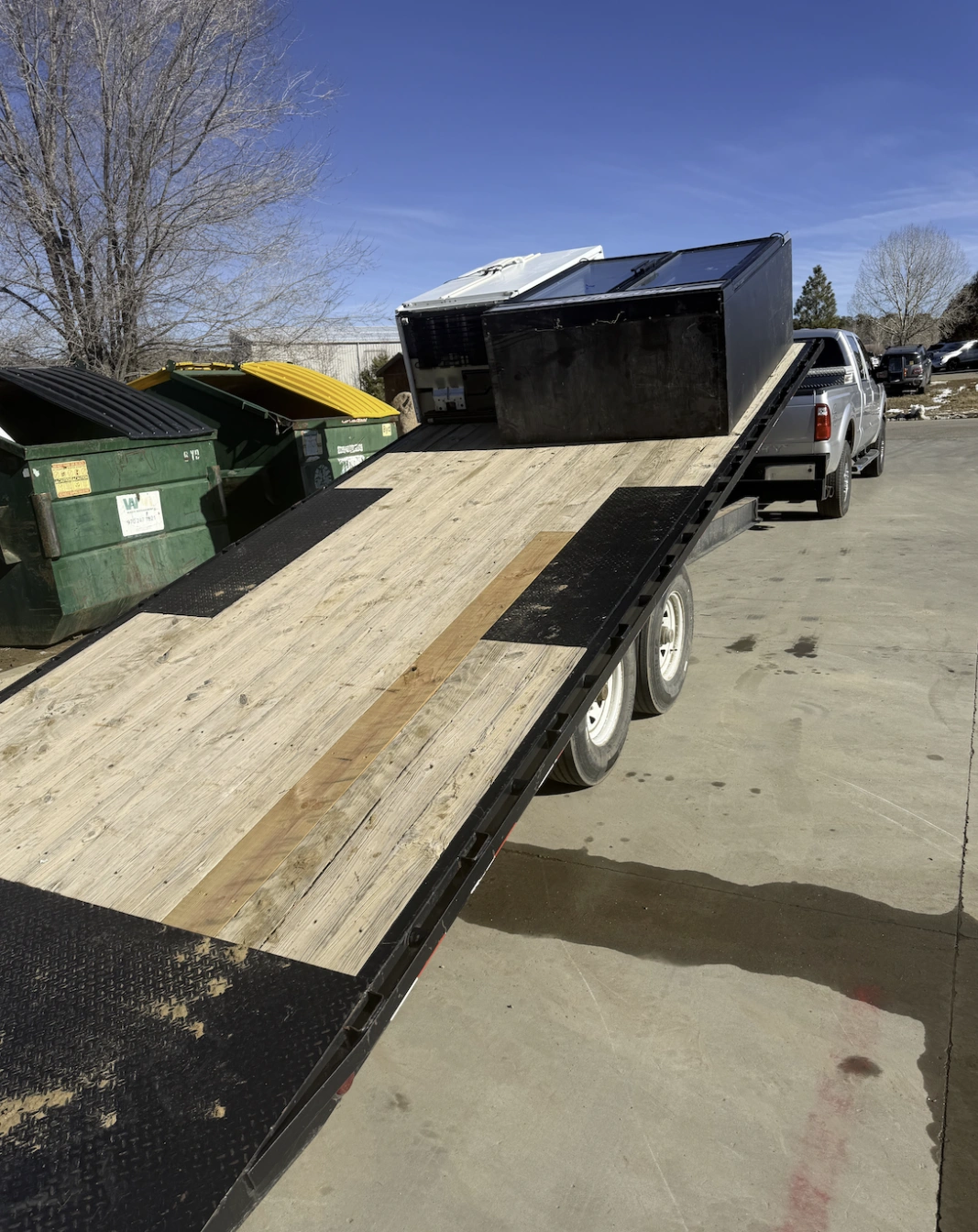
Office Cleanouts often starts when a space has reached the point where sorting and carrying it out alone is slowing down the next property step. Typical material can include furniture, boxed files, shelving, break-room items and other non-hazardous office contents, while the timing is often connected to relocations, closures, renovations, tenant transitions and workspace resets. The project can be partial or extensive, but the removal boundary should be clear before loading begins.
- Workstations
- Break-room items
- Supply closets
- Boxed office contents
If the project extends beyond office space into stored inventory or back-of-house materials, we can also review a warehouse cleanout.
The reason for scheduling office cleanouts changes how the job should be organized. A move may be driven by a fixed handoff date, while a cleanup may be more flexible but involve several decisions about what remains. Typical calls involve moves, closures, downsizing, remodels, tenant turnover, archive reduction, and preparing suites for new occupants. We use that context to identify the priority areas first. If the customer only needs one section cleared, we do not automatically treat the rest of the property as part of the job. If several areas are included, we account for the combined volume and handling before work starts.
Decide What Stays Before Loading Starts
Preparation for office cleanouts should make decisions clearer without shifting the heavy work back to the customer. Before the appointment, secure records and electronics containing data, label retained assets, coordinate keys or building access, and identify rooms not included in the cleanout. The crew can then focus on the approved items instead of stopping to sort personal property or renegotiate the removal area while loading is already underway. For this service, the practical boundary is especially important because working zone by zone, keeping exits and tenant routes open, separating bulky furniture from loose contents, and coordinating the load around building rules. If access rules or another person’s approval affect the job, settle those details before the crew begins moving material. If that related need is part of the same project, review tire disposal when defining the scope.
The best preparation is to make the removal instructions obvious. For office cleanouts, secure records and electronics containing data, label retained assets, coordinate keys or building access, and identify rooms not included in the cleanout. Loose small contents can be grouped when convenient, but bulky pieces usually do not need to be moved outside first. If the job includes stairs, a shared building, or a long route to the truck, we also want to know that before scheduling. A few current photos and one wide view of the access route can answer more useful questions than a close-up that shows only the item being removed.
How We Organize the Cleanout
On a office cleanouts job, we work through the approved areas in a sequence that fits the property instead of requiring one oversized staging pile. The crew may need to coordinate working zone by zone, keeping exits and tenant routes open, separating bulky furniture from loose contents, and coordinating the load around building rules, while keeping retained belongings and normal access separated from the removal path. Bulky pieces can establish the loading order, with boxes and smaller accepted items following as space allows. This approach is especially useful when moves, closures, downsizing, remodels, tenant turnover, archive reduction, and preparing suites for new occupants because the customer can see progress area by area without turning the rest of the property into temporary storage.
Truckee Junk Co. approaches office cleanouts as a controlled removal job. The crew can use working zone by zone, keeping exits and tenant routes open, separating bulky furniture from loose contents, and coordinating the load around building rules. The objective is to reduce unnecessary handling and keep approved material moving in one direction, from the work area to the load. When an item needs disassembly or extra labor, that is handled as part of the defined plan rather than improvised after other contents block the route. This approach is especially helpful on occupied properties where the customer still needs usable doors, hallways, parking, or common areas while the work is underway.
Access and Property Logistics
Access for office cleanouts is evaluated around the specific path from the approved items to the truck. Relevant conditions can include elevators, shared hallways, loading zones, parking limits, service hours, multiple floors, and the distance from suites or storage rooms to the truck. Those details affect labor and the order in which items should move, particularly when the job includes heavy, awkward, or numerous pieces. We use the estimate to identify the workable carrying route in advance so the crew is not improvising around blocked doors, shared spaces, or parking once loading starts. The goal is to keep the removal orderly while other parts of the property remain as usable as practical.
Access can have as much effect on office cleanouts as the amount of material. Conditions such as elevators, shared hallways, loading zones, parking limits, service hours, multiple floors, and the distance from suites or storage rooms to the truck change how many carries are required and how quickly bulky items can be moved. In Truckee and North Lake Tahoe, seasonal conditions can also affect where a vehicle can safely stage or how much of a driveway is usable. We do not assume a property has curbside access simply because the address is easy to reach. Photos of the path from the material to the loading point help set realistic expectations before the appointment.
What Belongs in the Removal Scope
Our cleanout scope is ordinary non-hazardous contents. Hazardous waste, biohazard remediation, and materials requiring specialized regulated handling are excluded from a normal cleanup. When the project also includes piano removal, we can define that approved non-hazardous portion separately. See the applicable public waste resource for current public disposal information.
Not every unwanted item belongs in a standard office cleanouts load. The working boundary is that ordinary office contents can be removed; document shredding, data destruction, hazardous waste, and specialized electrical or mechanical equipment are separate services. We would rather identify a restriction before scheduling than load material that cannot be accepted at the intended destination. If the customer is unsure about an item, a clear photo and description can usually establish whether it belongs in the normal scope. Separating regulated or hazardous material also prevents it from slowing down an otherwise straightforward cleanout or bulky-item pickup.
Why Customers Choose Truckee Junk Co.
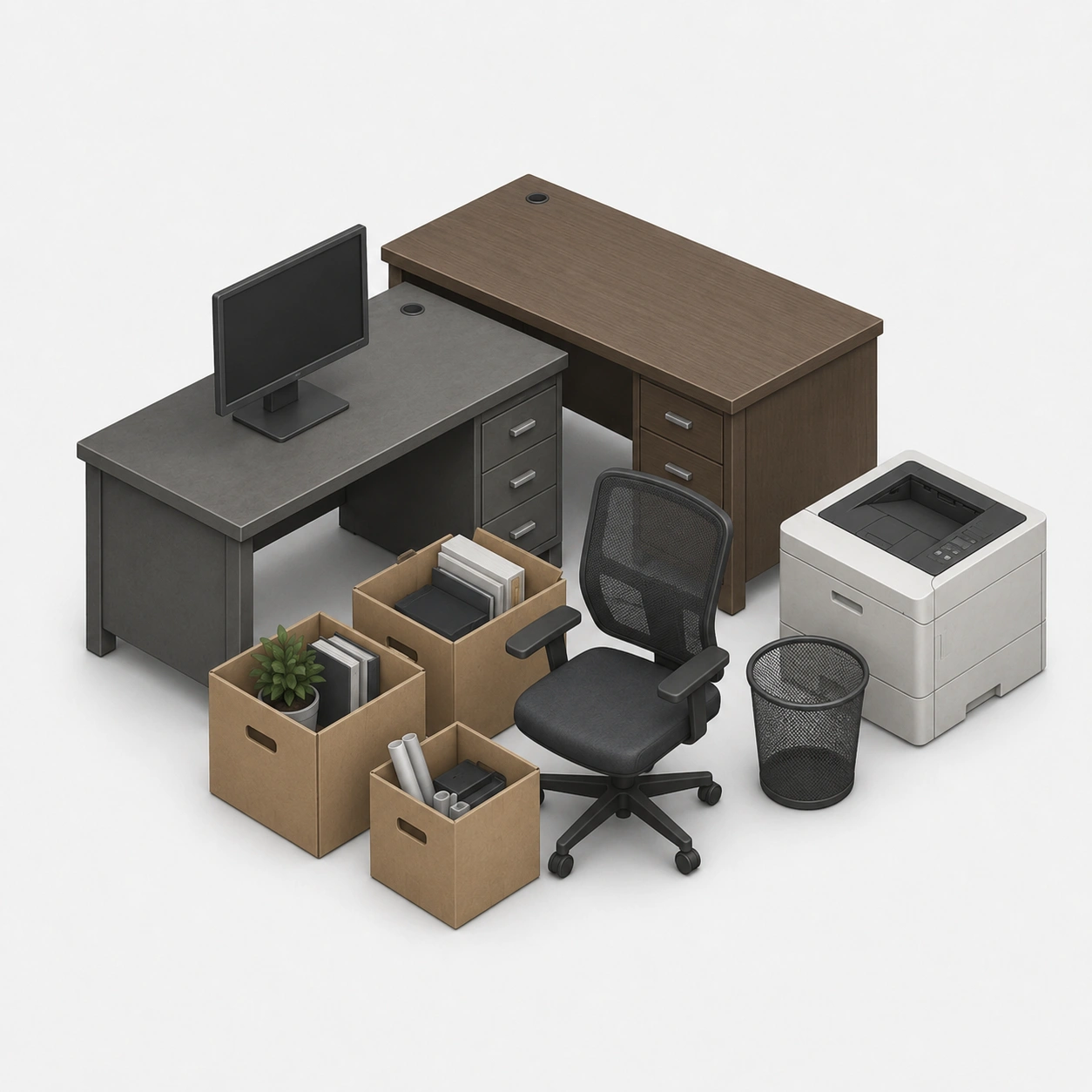
Truckee Junk Co. approaches office cleanouts around the customer’s end goal rather than treating the job as an undefined cleanup. We confirm the approved areas, account for number of areas, volume, furniture count, labor, elevator or stair access, building requirements, carrying distance, and disposal needs, and organize the work so the crew can handle working zone by zone, keeping exits and tenant routes open, separating bulky furniture from loose contents, and coordinating the load around building rules. When the load is complete, the intended result is to clear the approved rooms and storage areas so the property is easier to clean, repair, market, or hand over. That defined scope gives the customer a practical estimate before the appointment and a clear understanding of what the removal is meant to accomplish.
For office cleanouts, we focus on the parts that most directly affect the customer’s experience: a clear estimate, careful handling, an organized loading route, and a finish that matches the approved scope. Our goal is to clear the approved rooms and storage areas so the property is easier to clean, repair, market, or hand over. The estimate can change with number of areas, volume, furniture count, labor, elevator or stair access, building requirements, carrying distance, and disposal needs, which is why current photos and honest access details matter. Customers can ask questions before scheduling and can identify optional parts of the job separately. That makes it easier to choose the right scope instead of paying for work they did not intend to include.
For office cleanouts, a useful estimate starts with the difference between what is visible and what the crew will actually have to move. Tell us whether the approved items are loose, boxed, stacked, assembled, disconnected, or spread between several areas. For this type of job, number of areas, volume, furniture count, labor, elevator or stair access, building requirements, carrying distance, and disposal needs can change the labor and loading plan. We also want to know whether another crew, delivery, sale, inspection, or turnover depends on the space being cleared. Those details help us set a practical scope before arrival and keep the removal focused on the result you need rather than treating the property like a generic pile of junk.
Why choose Truckee Junk Co. for office cleanouts? Clear scope, careful access planning, professional loading, and a work area left tidy after the approved removal.
Service Areas: Truckee & North Lake Tahoe
Let's get started.
Frequently Asked Questions About Office Cleanouts
How should I prepare for office cleanouts?
Separate or clearly mark anything that stays, identify every area included in the cleanout, and share photos of the rooms, storage spaces, stairs, gates, or loading access. You do not need to carry everything outside first.
Do all of the items need to be boxed or bagged?
No. Bulky furniture and many larger items can remain in place. Loose small items are easier to handle when grouped, but the estimate should be based on the property as it actually sits.
Can a cleanout cover more than one room or area?
Yes. Tell us every approved area before scheduling so the scope can account for the total contents, carrying distance, and loading work instead of treating each room as a surprise addition.
What affects a office cleanouts estimate?
Volume, item type, labor, stairs, elevators, parking, carrying distance, and disposal requirements all matter. The estimate is free and is based on the actual cleanout rather than a generic room count.