- Home
- Services
- Residential
- Residential Junk Removal
- Same Day Junk Removal
- Furniture Removal
- Couch Removal
- Mattress Removal
- Appliance Removal
- Refrigerator Disposal
- Hot Tub Removal
- Yard Waste Removal
- Scrap Metal Removal
- E-Waste Disposal
- Garage Cleanout Services
- Home Cleanouts
- Estate Cleanout
- Storage Unit Cleanout Services
- Attic Cleanout Services
- Hoarding Cleanup
- Shed Removal
- Construction Debris Removal
- Piano Removal
- Carpet Removal
- Tire Disposal
- Commercial
- Residential
- Service Areas
- About
- Blog
- Contact
STORAGE UNIT CLEANOUT SERVICES TRUCKEE, CA
Storage Unit Cleanout Services in Truckee & North Lake Tahoe
Storage unit cleanouts move faster when facility access is confirmed, the keep items are separated, and the unit can be cleared without repeated decisions at the loading door. Call today for a fast, free estimate.
- Licensed & Insured
- Locally Owned
- Serving Since 2016
Get Your Free Quote
By submitting this form, you agree to our Terms of Use including consent to receive calls regarding your free estimate.
Confidential · We respond within one business day
Home › Storage Unit Cleanout Services
When ending a storage lease, consolidating units, moving or disposing of items no longer needed, storage unit cleanout services can remove boxed contents, furniture, shelving and mixed stored items without turning the project into a do-it-yourself carrying and loading job. At Truckee Junk Co., we start by confirming what should leave, where it is located, and how the crew can reach it. That gives the estimate a real scope and lets us plan around stairs, gates, parking, interior routes, or outdoor access before the appointment. The goal is straightforward: remove the approved material, keep the rest of the property organized, and leave the immediate work area ready for the customer’s next step.
Customers usually call for storage unit cleanout services because the unwanted material is blocking the next use of a room, building, yard, or storage area. Rather than asking the customer to move everything outside first, Truckee Junk Co. can review the items where they are and build the job around the actual carrying route. That lets us account for gate codes, hallway distance, elevators, carts, loading-zone rules, upper-floor units, narrow doors, and how close the truck can park before the work begins. It also gives the customer a practical scope that says what is being removed and what the area should look like when the approved work is finished.
Common Reasons Customers Need Storage Unit Cleanout Services
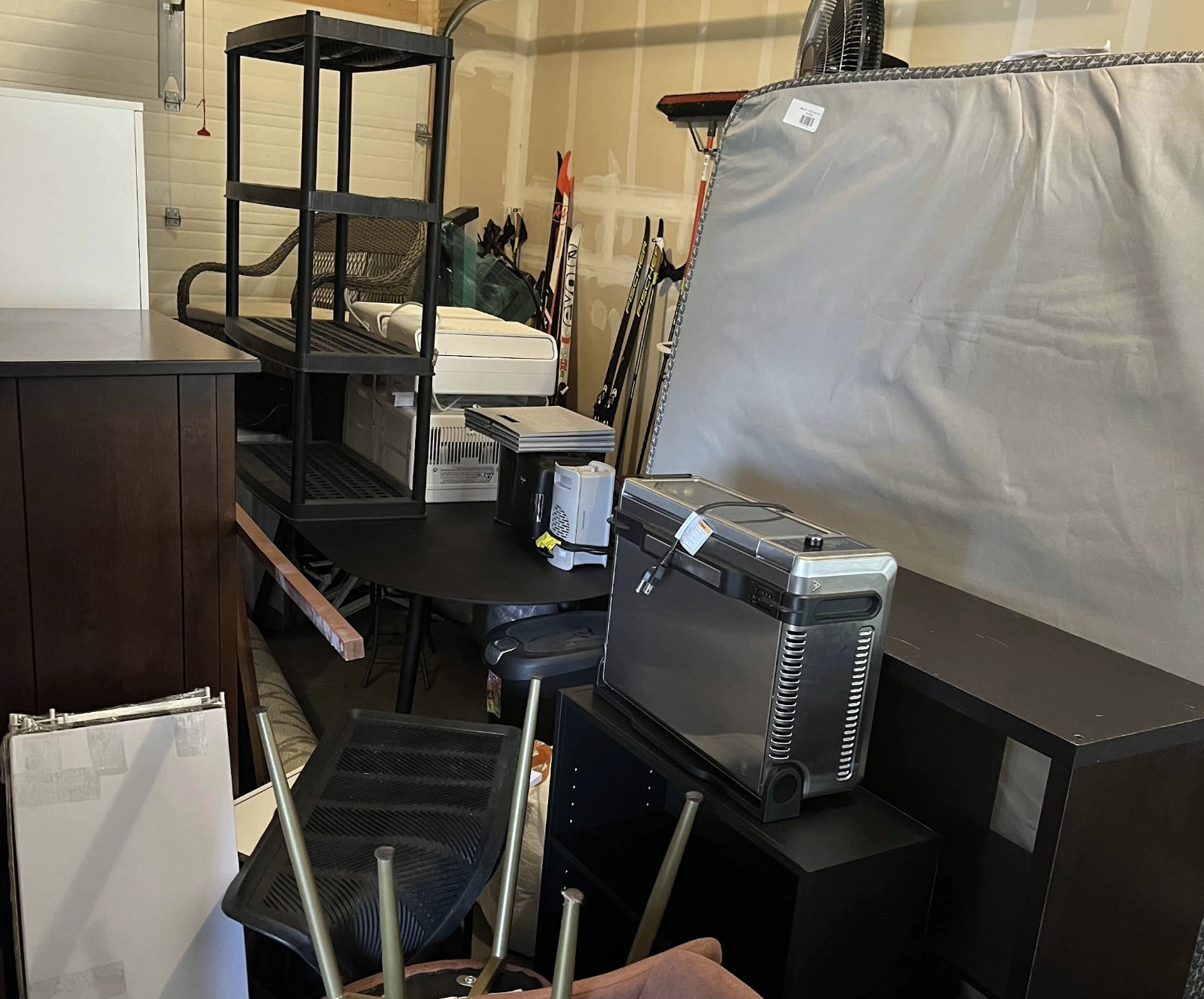
Storage Unit Cleanout Services often starts when a space has reached the point where sorting and carrying it out alone is slowing down the next property step. Typical material can include boxed contents, furniture, shelving and mixed stored items, while the timing is often connected to ending a storage lease, consolidating units, moving or disposing of items no longer needed. The project can be partial or extensive, but the removal boundary should be clear before loading begins.
- Facility gate access
- Storage lockers
- Stacked boxes
- Shelving units
Heavy metal pieces can change how a storage unit is loaded, so flag them in advance if scrap metal removal is part of what you need.
There is usually a specific next step behind a storage unit cleanout services request: make room, complete a turnover, prepare for contractors, finish a move, or simply get an unusable area back. Situations can include ending a rental, downsizing stored belongings, business inventory changes, estate work, moves, and clearing long-unused units. We ask enough questions to understand that goal because it influences which items should be prioritized and how the load is organized. The customer should be able to tell from the estimate which spaces and material are included, rather than relying on a vague promise to ‘take the junk’ and sorting out the details during the appointment.
Decide What Stays Before Loading Starts
The fastest way to make a cleanout confusing is to leave keep-versus-remove decisions until the crew is already carrying items. Mark retained furniture, boxes, documents, owner-supplied fixtures, or other belongings that stay. For estates, rentals, offices, or shared properties, make sure the person authorizing removal is clear about the scope. If another area needs estate cleanout, identify it in advance instead of adding it at the end.
Customers do not need to perform the heavy work before storage unit cleanout services, but a few preparation steps can save time. It helps to confirm facility hours and gate access, bring the correct unit information, separate anything being kept, and identify items with uncertain ownership before the appointment. When there are several categories of belongings, a simple keep/remove distinction is more useful than making a perfect pile. Fragile personal items, documents, medications, valuables, or anything the customer is unsure about should be moved aside or clearly marked. If access depends on a gate code, elevator reservation, property manager, or other scheduling detail, sharing that information in advance prevents the crew from arriving without a workable route.
How We Organize the Cleanout
On a storage unit cleanout services job, we work through the approved areas in a sequence that fits the property instead of requiring one oversized staging pile. The crew may need to coordinate working from accessible material toward the back of the unit, separating keep items, breaking down manageable furniture when useful, and keeping common areas clear, while keeping retained belongings and normal access separated from the removal path. Bulky pieces can establish the loading order, with boxes and smaller accepted items following as space allows. This approach is especially useful when ending a rental, downsizing stored belongings, business inventory changes, estate work, moves, and clearing long-unused units because the customer can see progress area by area without turning the rest of the property into temporary storage.
The physical work during storage unit cleanout services is planned in a sequence rather than as one uncontrolled pile. We may start by working from accessible material toward the back of the unit, separating keep items, breaking down manageable furniture when useful, and keeping common areas clear. If opening one area gives the crew safer access to another, the order can be adjusted as the job progresses. Customers do not need to micromanage each trip, but someone should be available to answer questions about uncertain items. At the end of each area, we can confirm that the intended material is gone before moving on, which is more reliable than discovering missed pieces only after the truck is loaded.
Access and Property Logistics
Access for storage unit cleanout services is evaluated around the specific path from the approved items to the truck. Relevant conditions can include gate codes, hallway distance, elevators, carts, loading-zone rules, upper-floor units, narrow doors, and how close the truck can park. Those details affect labor and the order in which items should move, particularly when the job includes heavy, awkward, or numerous pieces. We use the estimate to identify the workable carrying route in advance so the crew is not improvising around blocked doors, shared spaces, or parking once loading starts. The goal is to keep the removal orderly while other parts of the property remain as usable as practical.
The carrying route is part of the service, so storage unit cleanout services estimates should reflect more than what fits in a truck. We consider gate codes, hallway distance, elevators, carts, loading-zone rules, upper-floor units, narrow doors, and how close the truck can park. When the route is tight, we may need to reduce item size, make more controlled trips, or protect a particular turn before moving the heaviest pieces. When the route is open, the job can often be loaded more directly. Either way, identifying the conditions in advance reduces surprises and lets the customer compare the estimate to the actual work required at the property.
What Belongs in the Removal Scope
Our cleanout scope is ordinary non-hazardous contents. Hazardous waste, biohazard remediation, and materials requiring specialized regulated handling are excluded from a normal cleanup. When the project also includes furniture removal, we can define that approved non-hazardous portion separately. See the applicable public waste resource for current public disposal information.
Clear service limits are part of professional storage unit cleanout services. Our scope is built around accepted material, and the cleanout covers approved contents in the rented space; facility-owned fixtures, hazardous materials, and items prohibited by the property need separate authorization or handling. This becomes especially important in garages, commercial spaces, remodels, and older storage areas where unlabeled containers or specialty materials may be mixed with ordinary junk. Identifying those items early helps prevent delays. The estimate can still cover the rest of the approved contents while the customer arranges the appropriate handling for anything outside a normal junk-removal load.
Why Customers Choose Truckee Junk Co.
Truckee Junk Co. approaches storage unit cleanout services around the customer’s end goal rather than treating the job as an undefined cleanup. We confirm the approved areas, account for unit size, fill level, item mix, labor, hallway or elevator distance, parking access, and disposal requirements, and organize the work so the crew can handle working from accessible material toward the back of the unit, separating keep items, breaking down manageable furniture when useful, and keeping common areas clear. When the load is complete, the intended result is to clear the agreed contents and ordinary loose debris so the customer can sweep, inspect, or turn the unit back over to the facility. That defined scope gives the customer a practical estimate before the appointment and a clear understanding of what the removal is meant to accomplish.
Customers choose Truckee Junk Co. for storage unit cleanout services when they want the project reduced to a clear, manageable job. We review the scope, account for the carrying route, and explain the factors that affect the estimate. The result we are working toward is simple: clear the agreed contents and ordinary loose debris so the customer can sweep, inspect, or turn the unit back over to the facility. Pricing is based on unit size, fill level, item mix, labor, hallway or elevator distance, parking access, and disposal requirements, not on a vague promise that every property will cost the same. If photos do not show enough detail, we can clarify the conditions before the customer commits to the work. Call today for a free estimate based on the actual items and access.
Why choose Truckee Junk Co. for storage unit cleanout services? Clear scope, careful access planning, professional loading, and a work area left tidy after the approved removal.
Service Areas: Truckee & North Lake Tahoe
Let's get started.
Frequently Asked Questions About Storage Unit Cleanout Services
How should I prepare for storage unit cleanout services?
Separate or clearly mark anything that stays, identify every area included in the cleanout, and share photos of the rooms, storage spaces, stairs, gates, or loading access. You do not need to carry everything outside first.
Do all of the items need to be boxed or bagged?
No. Bulky furniture and many larger items can remain in place. Loose small items are easier to handle when grouped, but the estimate should be based on the property as it actually sits.
Can a cleanout cover more than one room or area?
Yes. Tell us every approved area before scheduling so the scope can account for the total contents, carrying distance, and loading work instead of treating each room as a surprise addition.
What affects a storage unit cleanout services estimate?
Volume, item type, labor, stairs, elevators, parking, carrying distance, and disposal requirements all matter. The estimate is free and is based on the actual cleanout rather than a generic room count.